I didn’t drive straight home after leaving the vineyard. I should have. That would’ve been cleaner, simpler, the kind of exit people imagine when they say they’re “done.” Instead, I ended up on the highway with my hands still shaking on the wheel, the silver envelope sitting on the passenger seat like it no longer belonged to me. The vineyard lights had faded in my rearview mirror, but the feeling of being quietly erased was still sitting in my chest like a weight I couldn’t exhale away. Every few miles, my phone lit up again—Nate, Mom, Nate again, Brianna—each notification like a pebble thrown at a locked door. I didn’t answer. I just kept driving until the world around me became unfamiliar enough to feel safe. When I finally reached the hotel, I didn’t go inside right away. I sat in the parking lot watching other guests from different lives check in and laugh and carry bags like nothing had broken between them and their families. Then I opened the envelope. The check was still there, crisp and untouched, but the note beneath it felt heavier than it had ever felt before. “Proud of you,” I had written. “I hope this helps you build your next chapter.” I stared at those words until they stopped meaning anything, then tore the note in half slowly, carefully, like I was cutting a final thread I didn’t want to admit had been holding me in place for years. Only after that did I walk into the hotel, leave the envelope behind on the bed, and sit in silence long enough to realize something unsettling: the pain wasn’t confusion anymore. It was clarity.
The next morning, my mother’s message came before sunrise, as if she had been waiting to make sure I didn’t get too comfortable in whatever version of peace I had found. “Family means sacrifice,” she wrote. That was it. No question. No concern. No curiosity about why I had left. Just instruction disguised as wisdom. I sat on my couch still wearing yesterday’s jeans, staring at the message until the words blurred slightly at the edges, and instead of anger, what rose in me was something older. Familiar. The memory of every time I had been the one expected to adjust—skip, move, soften, accommodate. Nate’s childhood came back in fragments: me picking him up from places he wasn’t supposed to be, covering for him when he missed deadlines, slipping him money when he said it was temporary. He had always been the center of motion in our family, and I had always been the thing orbiting him, stabilizing what he couldn’t hold together. That wedding wasn’t the first time I had been pushed to the edge. It was just the first time they had done it in public, with flowers and music and a photographer capturing everyone except the person paying for more of it than anyone knew. I didn’t reply to my mother. I opened my laptop instead, and something inside me—quiet, precise, almost clinical—made me type a single folder name into search: “REYNOLDS—NATE.” It appeared instantly, as if it had been waiting for me to stop pretending I didn’t already know what I would find inside it.
The first email was from the bank. Not recent. Not casual. Official in a way that stripped away all family language and replaced it with numbers and liability. My eyes moved faster than my thoughts as I read: co-signed loan agreements, deferred payments, interest restructuring, emergency credit extensions. Then another document. And another. My name appeared in places I hadn’t expected, not as a bystander but as a guarantor. Not just emotionally invested. Financially bound. The wedding, the venue deposit, even parts of Nate’s early career move across states—my approvals, my funds, my credit quietly holding up the life he had been presenting as fully his own. I leaned back in my chair as the realization settled in slowly, almost unwillingly, like a tide revealing something that had been buried under it for years. I wasn’t just the brother who had been pushed to the wall at his wedding. I was the structure underneath the wall itself. Another file opened automatically, one I didn’t remember saving: “Asset Allocation Summary.” My breath slowed. Properties. Investments. Accounts I had created years ago after a business decision I thought was temporary support had quietly become permanent infrastructure. Nate wasn’t just my brother. He was, on paper, tied into a financial ecosystem I controlled more than I had ever told him. And then the final document loaded—a notification of conditional ownership rights, triggered only under specific circumstances I had never once enforced. Including default on repayment. Including breach of agreement. Including abandonment of fiduciary respect. My fingers stopped moving. For the first time since the wedding, I wasn’t thinking about how I felt. I was thinking about what would happen to Nate if I stopped holding everything together.
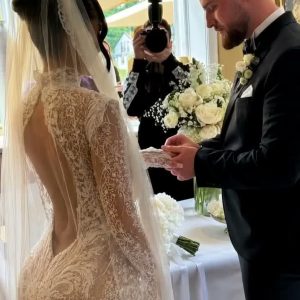
I spent the next hour walking through every document again, slower this time, not because I didn’t understand it, but because I needed to understand what it meant emotionally rather than legally. Each line carried a version of Nate I had protected without ever naming it that way. There were years when he had been “between opportunities,” and I had called it ambition instead of instability. There were times he had said “just until I get settled,” and I had translated that into long-term support without realizing I was rewriting the shape of his entire adulthood. I saw Brianna’s influence begin to appear in newer entries—requests for “liquidity flexibility,” “presentation-ready liquidity,” language that didn’t sound like someone building a life, but someone managing perception. The wedding suddenly looked different in my mind. Not just social hierarchy. Not just seating charts and photo frames. It looked like a stage built on assumptions I had been quietly paying for. I thought about the wall they had assigned me to, the phrase “clean family photos,” the way my presence had been treated like a visual inconvenience. And I understood something that made my stomach tighten—not that I had been excluded, but that I had been included everywhere except where the truth would have been visible. My phone rang again. Nate. This time I answered.
He didn’t start with anger. That came later. At first, there was confusion in his voice, a brittle edge of someone trying to pretend nothing irreversible had happened. “You left,” he said, like it was a misunderstanding I could fix with a sentence. I didn’t interrupt. “You embarrassed Brianna,” he added. Still not the point. Still circling the surface. I let him talk until the silence on my end became uncomfortable enough that he finally asked, sharper, “What is your problem?” That was when I closed my laptop. “My problem,” I said calmly, “is that you don’t understand what you stood on top of yesterday.” A pause. I could hear him moving somewhere, away from noise, away from guests, away from the version of himself he had performed in front of them. “It was a wedding seat,” he said. “You’re acting like it was—” “It wasn’t a seat,” I cut in, still calm. “It was a decision.” That stopped him. I could hear his breathing change. I told him about the folder. Not everything. Not yet. Just enough. The loans. The guarantees. The structures he had never asked about because he never had to. Silence stretched between us, heavier than anger. Then came the first crack. “You’re saying you own me?” he said quietly. And I almost laughed, because that was the only word he could reach for. “No,” I said. “I’m saying I stopped pretending you were standing on your own when you weren’t even touching the ground.”
He showed up at the hotel an hour later. I didn’t invite him. I didn’t expect him. But I heard the knock, and when I opened the door, he looked smaller than he had at the wedding—no tux, no crowd, no curated version of himself to hold him upright. Just a man trying to reconcile the version of reality he had built with the one he was suddenly standing in. He stepped inside without speaking, eyes scanning the room like he expected proof instead of conversation. I didn’t offer him a seat. He didn’t ask for one. “Tell me what you did,” he said finally. So I did. Not dramatically. Not like revenge. Just facts. The financial structure. The guarantees. The obligations tied to his name and mine. The timeline he had never seen because he had never needed to look. His face shifted as I spoke—not into guilt, not yet, but into something more uncomfortable: dependence becoming visible for the first time. “So what now?” he asked when I finished. That was the real question. Not what happened. What changes. I picked up the envelope from the bed, still half-empty, still carrying the ghost of what I had intended it to mean. “Now,” I said, “you stop pretending you get to erase people who make your life possible.” His jaw tightened. “That’s not fair.” I nodded slowly. “Neither was standing me against a wall so I wouldn’t ruin your photos.”
By the time he left, the sun was low enough to turn the hotel window gold, softening everything except what had been said. I sat alone for a long time after the door closed, listening to the silence settle into something less sharp than before. I didn’t feel victorious. That wasn’t it. It felt more like standing in a room after furniture has been moved and realizing you can finally see how much space was always there. My phone buzzed again—messages from my mother softening her tone now that something had shifted, from Brianna trying to reframe the day as “stressful misunderstandings,” from guests who had only just begun to piece together what they had witnessed. I didn’t respond. Instead, I opened my laptop one last time and reviewed the final clause in the documents—the one I had never activated, the one that transferred control of shared financial structures back to me in the event of breach of trust or unilateral exclusion from agreed family obligations. My cursor hovered over it for a moment. Then I closed the file. Not because I forgave anything. But because I understood something clearer than anger: I didn’t need to burn anything down to stop being part of it. I just needed to stop holding it up. And for the first time since that wedding, the silence that followed didn’t feel like exile. It felt like space I could finally breathe in.