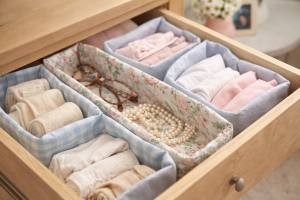
Long before plastic storage bins filled store shelves, before home organization became a billion-dollar industry, and before social media influencers showcased perfectly arranged closets and color-coded drawers, people found practical ways to keep their homes neat using the resources they already had. Many of these methods were simple, inexpensive, and surprisingly effective. One such forgotten household trick involved something most people already owned in abundance: old pillowcases.
Rather than discarding pillowcases once they became worn, faded, or mismatched, homemakers often found creative ways to repurpose them throughout the house. Among the most useful applications was using pillowcases as drawer liners and organizers. While the idea may sound old-fashioned today, it remains a clever and practical solution that can create order, save money, and reduce the everyday stress that comes from disorganized living spaces.
At first glance, a pillowcase may seem like an unlikely organizational tool. Yet its soft fabric, durable construction, and convenient size make it surprisingly versatile. For generations, people used old pillowcases to protect clothing, separate household items, absorb moisture, reduce dust buildup, and create simple storage systems without spending a single extra dollar.
The process itself is remarkably straightforward. A clean pillowcase is placed flat inside a dresser drawer, creating a soft barrier between the drawer’s surface and the items stored inside. Depending on the size of the drawer, the excess fabric can be folded neatly along the edges to create a clean and tailored appearance. The result is a protective lining that helps prevent clothing from catching on rough wood, snagging on imperfections, or coming into direct contact with surfaces that may accumulate dust over time.
Some people take the concept a step further by folding portions of the pillowcase to create natural dividers. These sections can separate socks from undergarments, scarves from accessories, or seasonal items from everyday essentials. Instead of everything shifting into a jumbled pile each time the drawer is opened, the contents remain organized and easy to locate.
The beauty of the method lies in its flexibility. Every household has different storage needs, and pillowcases can be adapted accordingly. Older pillowcases that are too worn for bedding can be cut into smaller pieces and sewn into custom-sized pouches or sleeves. These handmade organizers can store jewelry, cosmetics, office supplies, craft materials, kitchen utensils, charging cables, and countless other items that tend to create clutter.
For families living on tight budgets, this approach offers an additional advantage: it costs virtually nothing. Modern organizational products can quickly become expensive. Drawer dividers, storage containers, specialty organizers, and closet systems often add up to significant costs, especially when organizing multiple rooms. By contrast, repurposing pillowcases allows homeowners to improve order and functionality using materials they already possess.
This resourcefulness reflects a mindset that was once common in many households. Previous generations often viewed household items not as disposable products but as resources with multiple potential uses. A pillowcase nearing the end of its life as bedding still had value. It could become a cleaning cloth, a laundry bag, a storage pouch, a craft material, or a drawer organizer.
In many ways, the pillowcase drawer trick represents a broader philosophy of homemaking—one centered on creativity rather than consumption. Instead of immediately purchasing a solution whenever a problem arose, people first looked around their homes to see what could be adapted or reused.
Beyond its financial benefits, the method also contributes to a calmer living environment.
Researchers and professional organizers frequently note the connection between clutter and stress. While a messy drawer may seem insignificant, small frustrations accumulate over time. Searching for a missing pair of socks, digging through tangled accessories, or constantly reorganizing cluttered spaces can create a surprising amount of mental fatigue. When belongings have designated places and remain organized, daily routines become smoother and more efficient.
The pillowcase trick helps create this sense of order through simple structure. Clearly defined sections encourage items to remain where they belong. Soft fabric boundaries provide visual organization without the rigidity of plastic compartments. Even small improvements in organization can make everyday tasks feel easier and less stressful.
Another practical benefit is protection. Wooden drawers, particularly older ones, may develop rough surfaces, splinters, or areas where finishes begin to wear down. Delicate fabrics such as silk, lace, wool, or fine cotton can occasionally snag on these surfaces. A fabric liner creates a gentle buffer that helps protect clothing and extends its lifespan.
Pillowcases can also assist with moisture control and freshness. Some homemakers place small sachets of dried lavender, cedar chips, or other natural fragrances beneath the fabric liner. This not only helps drawers smell pleasant but may also discourage mustiness during humid seasons. The pillowcase serves as a barrier while allowing subtle scents to circulate among stored items.
Many people who rediscover this technique are surprised by how effective it feels compared to modern organizational systems. There is a simplicity to it that stands in contrast to today’s tendency to seek complicated solutions for relatively simple problems. A pillowcase requires no assembly, no instructions, no special tools, and no additional shopping trip.
Perhaps even more meaningful is the sense of nostalgia associated with the practice.
For many individuals, the technique evokes memories of parents, grandparents, or older relatives who approached household management with ingenuity and patience. These were people who often grew up during times when wasting usable items was discouraged and resourcefulness was considered a valuable skill.
A grandmother might have carefully folded old linens for future projects. A parent might have transformed worn fabrics into useful household tools rather than throwing them away. These habits were not necessarily driven by trends or environmental concerns; they were simply practical responses to everyday life.
Today, as more people seek sustainable alternatives to constant consumption, many of these traditional practices are finding new appreciation. Reusing household items reduces waste, extends the life of existing materials, and encourages a more thoughtful approach to organization. The pillowcase drawer trick fits perfectly within this philosophy.
It also reminds us that creating a comfortable home does not always require expensive purchases. Sometimes the most effective solutions are the simplest ones—the ideas that have quietly survived for generations because they work.
In a world filled with endless products promising perfect organization, there is something refreshing about a method that relies on creativity rather than spending. A forgotten pillowcase, once destined for the donation pile or trash bin, can become a practical organizational tool that protects clothing, reduces clutter, and simplifies daily life.
Ultimately, the enduring appeal of this old-fashioned trick lies in more than just convenience. It represents a way of thinking that values resourcefulness, practicality, and mindful use of what we already own. It shows that order does not always come from buying more things. Sometimes it comes from seeing familiar objects in a new way.
And in a busy world where stress often seems unavoidable, finding simple methods to create a cleaner, calmer, and more organized home may be one of the most valuable household skills of all.