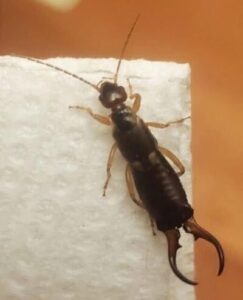
At first glance, it looks like something straight out of a nightmare. Its long, segmented body, dark coloring, and the unmistakable pair of sharp pincers at the end give it a menacing appearance that can make anyone jump back in alarm. For many people, especially parents, the fear intensifies instantly if a child claims they’ve been bitten. Panic spreads quickly, assumptions take over, and before long, the same urgent question echoes everywhere: what exactly is this thing, and how dangerous is it?
The insect in question is commonly known as an earwig. Despite its intimidating look and the unsettling myths that surround it, the truth about this creature is far less frightening than most people imagine. In fact, much of the fear tied to earwigs comes from misunderstanding, exaggerated stories, and their naturally eerie appearance rather than any real threat they pose to humans.
Earwigs belong to an order of insects known as Dermaptera, a name derived from Greek words meaning “skin wings,” referring to their unique folded hindwings. While many people never notice this detail, earwigs actually have wings tucked neatly under their short, leathery front wings. Despite having the ability to fly, most species rarely do so, preferring instead to crawl and hide in dark, damp environments.
The most distinctive feature of the earwig is undoubtedly its pincers, technically called cerci. These appendages are what give the insect its fearsome reputation. However, their purpose is far more practical than threatening. Earwigs use their cerci primarily for defense against predators and occasionally for capturing small prey. In some species, the pincers also play a role in mating rituals, particularly among males, whose cerci are often more curved and pronounced.
When it comes to human interaction, earwigs are not aggressive insects. They do not actively seek out people, nor do they attack without provocation. The idea that earwigs are dangerous biters is largely a myth. In reality, earwigs don’t “bite” in the traditional sense at all. They lack the mouthparts necessary to deliver a bite that would harm human skin. What they can do, however, is pinch using their cerci if they feel threatened, trapped, or handled roughly.
This pinch might cause a brief moment of discomfort, similar to a small pinch from a pair of tweezers, but it is rarely painful and almost never results in injury. There is no venom involved, no toxins injected, and no lasting damage. For most people, the initial shock and fear of being pinched are far more intense than the sensation itself. In many cases, the experience is over in seconds and leaves no mark at all.
One of the most persistent and unsettling myths about earwigs is the idea that they crawl into people’s ears while they sleep, burrow into the brain, and lay eggs. This story has been passed down for generations and is likely the reason behind the insect’s name. However, there is no scientific evidence to support this claim. While it is theoretically possible for any small insect to accidentally enter an ear, it is extremely rare, and earwigs have no natural instinct or desire to do so. They prefer dark, moist environments—not human ears.
Understanding the true behavior of earwigs can help replace fear with clarity. These insects are actually quite beneficial in many ways. They are omnivores, meaning they feed on a variety of organic materials. In gardens, earwigs can act as natural recyclers, feeding on decaying plant matter, fungi, and even smaller insects like aphids. This makes them, in some cases, helpful contributors to the ecosystem.
However, their presence isn’t always welcomed, especially when they start appearing inside homes. For many people, the real concern arises not from a single earwig sighting, but from seeing multiple of them in a short period of time. This can create the impression of an infestation and raise concerns about cleanliness or safety.
In reality, earwigs are primarily drawn to moisture. They thrive in damp environments where they can find shelter and food. This is why they are often found in areas like bathrooms, basements, kitchens, and laundry rooms. Outside, they tend to hide under rocks, mulch, leaf litter, or piles of wood—anywhere that provides darkness and humidity.
If earwigs are appearing indoors, it usually indicates that there is a nearby environment that meets their needs. This could be something as simple as a leaky pipe, excess condensation, poor ventilation, or damp soil near the foundation of a house. Rather than signaling danger, their presence is often a clue that moisture levels need to be addressed.
Reducing earwig activity in the home doesn’t require harsh chemicals or extreme measures. Simple steps can make a significant difference. Keeping indoor areas dry is one of the most effective strategies. Fixing leaks, using dehumidifiers in damp spaces, and ensuring proper ventilation can all help create an environment that is less appealing to them.
Sealing small cracks and gaps around doors, windows, and foundations can also prevent earwigs from entering in the first place. Since they are nocturnal and tend to wander at night, reducing outdoor lighting near entry points can minimize their attraction to your home. Additionally, clearing away debris like leaves, mulch, and woodpiles from the immediate perimeter of the house can reduce the number of hiding spots available to them.
For those who prefer natural methods, there are simple traps that can be used to monitor and reduce earwig populations. For example, placing a rolled-up newspaper or a damp cloth in an area where earwigs are active can attract them overnight. In the morning, the trap can be disposed of, removing multiple insects at once without the need for chemicals.
It’s also important to understand that earwigs are not a sign of poor hygiene. Unlike pests such as cockroaches or rodents, earwigs are not attracted to food waste or unsanitary conditions. Their presence is almost always linked to environmental factors rather than cleanliness. This distinction can help ease unnecessary worry and shift the focus toward practical solutions.
For parents, the situation can feel especially stressful if a child becomes frightened after encountering an earwig. The combination of the insect’s appearance and the child’s reaction can quickly escalate concern. However, reassuring children with simple, factual explanations can go a long way in reducing fear. Explaining that the insect is harmless and that its “pinchers” are only used for defense can help demystify the experience and make it less intimidating.
In rare cases where someone is pinched and experiences redness or irritation, basic first aid is more than sufficient. Washing the area with soap and water and applying a cold compress can alleviate any minor discomfort. There is no need for medical treatment unless there is an unrelated allergic reaction, which is extremely uncommon.
The broader lesson in situations like this goes beyond just earwigs. It highlights how easily fear can grow when something unfamiliar appears, especially when it looks threatening. Human instincts are wired to react quickly to potential danger, and in many cases, that instinct is helpful. However, it can also lead to misunderstandings when appearances are misleading.
Social media and word-of-mouth can amplify these fears, turning a harmless encounter into a widespread panic. A single photo or story, taken out of context, can quickly spread and create a sense of urgency that doesn’t match reality. This is why taking a moment to pause, research, and understand what you’re seeing is so important.
In the case of earwigs, knowledge truly is power. Once you understand what they are, how they behave, and what they are capable of, the fear begins to fade. What initially seemed like a dangerous intruder becomes just another small, harmless creature sharing the environment.
Nature is full of organisms that look far more threatening than they actually are. From insects with bright warning colors to creatures with sharp-looking features, many species rely on appearance as a form of defense. Earwigs fall into this category. Their pincers may look intimidating, but they are not weapons designed for harming humans.
Instead, earwigs are a reminder that not everything that looks scary is dangerous. They play a role in the ecosystem, contribute to the breakdown of organic matter, and generally keep to themselves unless disturbed. Their presence may be unexpected, but it is rarely cause for alarm.
In the end, the “terrifying bug” that left so many people panicking turns out to be far less dramatic than it first appears. It’s not a threat lurking in the shadows, waiting to cause harm. It’s simply an insect doing what it has always done—seeking shelter, avoiding danger, and surviving in its environment.
By replacing fear with understanding, you can respond more calmly and effectively. Instead of reacting with panic, you can take simple, practical steps to manage the situation and prevent future encounters. And perhaps most importantly, you can avoid unnecessary stress by recognizing that sometimes, the scariest-looking things are actually the least harmful once you know the truth.