Last Saturday, I wandered through a bustling yard sale on the edge of town, scanning tables filled with glassware, old books, and stacks of vinyl records. Among the piles of forgotten treasures, my eye landed on a peculiar wooden contraption with metal rollers. At first glance, it looked like an odd kitchen tool or a toy from another era. But a small handwritten tag gave it away: “Vintage Laundry Wringer.”
I picked it up and ran my fingers over its smooth wooden handles and cast-iron rollers. It felt sturdy, yet strangely delicate, like something that had endured decades of careful use. I had grown up with modern washers and dryers that did everything with the push of a button. The idea that people once relied on tools like this every week made me pause.
Before electric machines, laundry wasn’t a simple chore—it was a laborious ritual that could take an entire day. Families had to fetch water from wells or rivers, heat it over a fire, scrub clothes with soap, rinse repeatedly, wring them by hand, and hang them to dry. Every step required muscle, patience, and ingenuity. Tools like wringers, hand agitators, and washboards weren’t luxury items—they were lifelines, designed to make life a little more manageable.
The washboard, perhaps the most iconic of these items, had a wooden frame with a corrugated metal surface. Clothing was rubbed against it, soap worked into fibers, and stubborn stains slowly disappeared. Agitation devices, shaped like paddles or plungers, allowed clothes to move through water efficiently, mimicking the motion of modern washing machines. And wringers—like the one I held in my hands—squeezed water from heavy fabrics, reducing hours of grueling labor and sore hands.
Many of these tools were crafted from wood and metal, chosen for durability and repairability long before plastics became common. Their designs reflected practicality and ingenuity, a quiet testament to the problem-solving skills of generations past. They survived repeated use, harsh weather, and the weight of wet laundry, yet some of them still exist today, tucked away in attics, garages, and flea markets, waiting to be rediscovered.
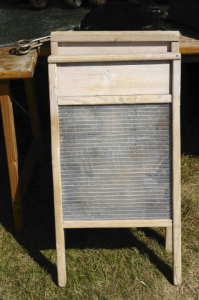
I imagined the women and men who had used this wringer decades ago, working side by side on laundry day. In many communities, washing clothes was not just a chore—it was a social event. People gathered along rivers, shared washhouses, or worked outdoors, exchanging stories, news, and laughter while completing one of the most physically demanding tasks of daily life. Laundry day required coordination, effort, and a quiet resilience that we rarely appreciate today.
The invention of electric washing machines changed everything. Early machines still required manual effort, but they drastically reduced scrubbing and labor. Over time, automatic washers and dryers became household staples, transforming an all-day task into a routine that could be completed in a fraction of the time. As machines became ubiquitous, older tools like washboards, wringers, and paddles fell out of use, their practical purpose fading into history.
Yet these objects still fascinate people. They offer a tangible connection to the past, allowing us to see and feel how domestic life once functioned. Younger generations, raised with automated appliances, might struggle to imagine life without running hot water or spin cycles. A simple wringer, once essential, now sparks curiosity, nostalgia, and even admiration for the craftsmanship of earlier eras.
Collectors and historians prize these tools not just for their functionality, but for their story. Each groove, dent, and scratch tells of long-ago hands working tirelessly to care for a family. Displayed in homes, restaurants, or museums, they remind us of both ingenuity and endurance. Even in decorative use, they can transform a modern space, adding a rustic charm that carries a quiet, historical narrative.
Standing there at the yard sale, I realized that what appeared to be a simple antique was actually a portal to another time. It represented resilience, creativity, and a practical wisdom that modern appliances often conceal. It reminded me that even the most ordinary objects—once overlooked—can carry stories of labor, community, and care.
I purchased the wringer and brought it home, imagining it not as a tool for laundry, but as a storyteller. On my shelf, it serves as a reminder that daily life is shaped by ingenuity, perseverance, and small, practical innovations. And sometimes, the most mundane objects from our past—forgotten on a yard sale table—are the ones that connect us most profoundly to history, to human effort, and to the rhythms of life before convenience became the norm.
In the end, vintage laundry tools are more than relics. They are symbols of persistence, creativity, and connection. And every time I look at that wringer, I am reminded that history isn’t only found in museums—it lives quietly in the hands of those who worked, crafted, and cared, leaving objects behind that continue to tell their stories long after the machines have taken over.