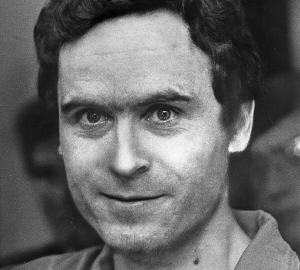
At first glance, the boy in the old black-and-white photograph seems ordinary — quiet, polite, and somewhat reserved, growing up in a small town with a paper route and participation in Scouts.
It is almost unthinkable to consider that this child would later be remembered in history for committing serious crimes that shocked the public. While the specific actions of his later life are disturbing, understanding the trajectory of his development, personality, and the societal and psychological factors surrounding him provides valuable lessons in criminal psychology, law enforcement, and the complexities of human behavior.
This is the story of Theodore Robert Bundy, a figure whose life demonstrates the contrast between outward appearances and internal struggles, and highlights the importance of awareness, prevention, and study in understanding harmful behavioral patterns.

Early Life: Birth and Family Confusion
Theodore “Ted” Bundy was born on November 24, 1946, in Burlington, Vermont, at the Elizabeth Lund Home for Unwed Mothers, a facility designed to help unmarried women give birth discreetly.
His mother, Eleanor Louise Cowell, was a young woman whose pregnancy caused family tension. As a result, Ted was initially raised by his maternal grandparents, who told him his mother was actually his older sister.
This complex family situation has led psychologists and biographers to speculate about its impact on his early development, particularly regarding identity, attachment, and self-perception.
Bundy later learned the truth about his parentage when he saw a birth certificate listing his father as “Unknown.” Some rumors suggested that his biological father might have been a family member, but there is no credible evidence to support these claims, and DNA analysis has ruled out such possibilities.
When Ted was about three years old, he and his mother relocated to Tacoma, Washington. His stepfather, Johnnie Bundy, legally adopted him. Despite outward portrayals of a normal childhood, those around him observed social awkwardness and behaviors that, in hindsight, have raised questions for experts studying early risk factors in violent behavior.
Childhood and Adolescence: Early Indicators
Bundy’s early life presents a mix of typical childhood experiences and unusual behaviors that have been examined in psychological studies:
1. Social Challenges and School Life
Ted attended public schools and joined organizations like Boy Scouts, yet he struggled socially. Accounts describe him as shy, introverted, and sometimes bullied for speech difficulties and social awkwardness.
He often appeared polite and studious, yet these outward behaviors masked a complex internal world. Social isolation and insecurity can affect the way children develop empathy, impulse control, and interpersonal skills — factors that are frequently considered in studies of criminal development.
2. Early Behaviors of Interest to Psychologists
While anecdotal and sometimes debated, Bundy’s childhood included behaviors that later intrigued psychologists. For instance, reports from family members mention unusual experiments with risk-taking and testing boundaries.
At the same time, Bundy engaged in normal childhood activities: delivering newspapers, playing outside, and participating in school and community events. This juxtaposition of normality and troubling behavior demonstrates how outward appearances can conceal inner conflicts or problematic tendencies.
Education and Early Adulthood
Bundy displayed intelligence and academic ability. He graduated from the University of Washington in 1972 with a degree in psychology.
During college, he was described as articulate, charming, and ambitious. He worked on political campaigns, including that of a Republican governor in Washington, and earned the support and respect of some professors.
Bundy also attended law school in Utah, though he did not complete the program. During these years, he maintained relationships and attempted to establish himself socially, demonstrating a complex blend of normality and hidden internal struggles.
Psychologists studying Bundy’s life have suggested that his public persona — intelligent, polite, and seemingly ordinary — helped him mask the darker aspects of his personality, making his eventual criminal activities all the more shocking to those who knew him superficially.
The Importance of Appearance vs. Reality
One of the factors that contributed to Bundy’s notoriety was the stark contrast between his appearance and his actions. He appeared as a normal, well-adjusted young man: polite, intelligent, and socially engaged.
This contrast highlights a critical psychological and criminological insight: dangerous behavior is not always visible externally. Studying cases like Bundy’s helps law enforcement, psychologists, and society better understand risk factors, early intervention opportunities, and the complex nature of human behavior.
Experts note that outward social success — participating in school, community activities, and higher education — does not necessarily reflect internal moral or psychological development. Bundy’s story illustrates the importance of considering behavioral patterns over mere appearances.
Psychological Perspectives
Psychologists and criminologists have long studied Bundy’s life to understand the interplay of upbringing, personality, and criminal development. Key factors examined include:
Family Dynamics: Early confusion regarding parental roles and family structure may influence attachment styles and self-perception.
Social Experiences: Childhood teasing, isolation, or insecurity can contribute to later difficulties in empathy and emotional regulation.
Cognitive Abilities: High intelligence and charm can sometimes be used manipulatively, creating opportunities to conceal harmful tendencies.
While psychological analysis cannot predict criminality with certainty, Bundy’s case remains a key example in forensic psychology courses, emphasizing the importance of early behavioral observation and assessment.

Trial and Legal Proceedings
Bundy’s arrests and trials were highly publicized, in part because of his unusual combination of charm, intelligence, and notoriety.
During his legal proceedings, he represented himself at times, attracting media attention and contributing to what some observers describe as a blend of legal drama and public spectacle.
From a legal perspective, Bundy’s trials:
Tested courtroom procedures for high-profile cases.
Led to discussions on mental health evaluations and competency assessments.
Highlighted the need for media responsibility when covering criminal cases, given the risk of glorifying individuals over respecting victims.
Lessons in Criminal Psychology
Studying Bundy’s life provides broader insights beyond the shocking facts of his crimes:
Appearance Can Be Deceptive: External charm or intelligence does not guarantee ethical behavior.
Early Behaviors Matter: Social and psychological difficulties in childhood may indicate risks requiring attention.
Criminal Profiling Is Critical: Understanding behavior patterns helps prevent further harm and improves investigative outcomes.
Victim-Centered Awareness: Emphasizing the safety, dignity, and protection of potential victims is paramount.
His case remains central in criminal psychology curricula worldwide, helping law enforcement, counselors, and social workers understand complex human behavior.
Remembering the Impact
While Bundy’s name is widely known, the focus in modern analysis has shifted toward lessons learned, prevention, and the lives affected. Families, communities, and law enforcement officials experienced profound consequences, underscoring the importance of vigilance, psychological study, and social responsibility.
Educators and criminologists stress that the ultimate goal in studying cases like Bundy’s is to prevent similar patterns in the future, not sensationalize past tragedies. Programs in schools, law enforcement, and mental health advocacy now incorporate these lessons to promote safety and early intervention.
A Legacy of Awareness
Ted Bundy’s story, while dark, has influenced multiple fields:
Criminal Justice: Highlighting the need for coordinated interstate law enforcement efforts and robust investigative techniques.
Forensic Psychology: Contributing to profiling methods and behavioral analysis.
Public Education: Raising awareness about personal safety, early warning signs of concerning behavior, and the importance of community vigilance.
The case serves as a reminder of the need for careful attention to both external and internal behaviors, encouraging research, education, and preventive measures.
Conclusion: Lessons from a Complex Life
Theodore Robert Bundy’s life serves as a cautionary tale about the complexity of human behavior, the potential for hidden danger, and the importance of early psychological insight.
While his actions were horrific and the details of his crimes are deeply troubling, focusing on the psychological, social, and investigative aspects allows for meaningful learning.
His story emphasizes:
The contrast between outward appearances and inner reality.
The value of early identification and intervention for concerning behaviors.
The importance of community awareness, law enforcement coordination, and public education.
In studying Bundy’s life today, society can focus not on sensationalizing the person, but on understanding the conditions, behaviors, and systems that can help prevent future tragedies.
By analyzing such cases responsibly, we honor the lessons learned and prioritize education, safety, and psychological insight, turning a story of darkness into a platform for knowledge, awareness, and prevention.

