Long before stores were filled with plastic storage containers, stackable organizers, and specialized products designed for every corner of the home, people found creative ways to keep their living spaces neat and functional. Homemakers learned to make the most of what they already had, often transforming ordinary household items into practical solutions. Among these forgotten methods was a surprisingly effective trick that many younger generations have never heard of: using old pillowcases as drawer liners and organizers.
At first glance, the idea may sound unusual. After all, pillowcases are meant for pillows, not dresser drawers. Yet for decades, families discovered that worn but clean pillowcases could serve a variety of useful purposes around the home. Instead of throwing them away when they became mismatched, faded, or slightly worn, resourceful homeowners found ways to repurpose them. The result was a simple organizational system that protected clothing, reduced clutter, and helped create a sense of order without spending a single dollar.
In an era before online shopping made it possible to order storage solutions with a few clicks, people often relied on creativity and practicality. Household budgets were tighter, and many families believed strongly in the idea that items should be used fully before being discarded. A pillowcase that was no longer attractive enough for a bed could still have years of usefulness left. Rather than seeing it as waste, homemakers saw potential.
The process itself was remarkably simple.
A freshly washed pillowcase could be laid flat inside a dresser drawer, creating a soft barrier between the wooden surface and the items stored inside. Depending on the drawer size, excess fabric could be folded neatly along the edges to create a smooth and tidy appearance. The fabric protected delicate garments from rough surfaces and helped prevent small snags or abrasions that sometimes occurred when clothing rubbed directly against unfinished wood.
Many older dressers were not lined with the smooth materials commonly found today. Some had rough interiors, exposed wood grain, or surfaces that could catch delicate fabrics. A soft cotton pillowcase created a protective layer that preserved both the furniture and the clothing stored inside. It was a practical solution requiring no special tools, no assembly, and no additional expense.
But the usefulness of pillowcases extended far beyond simple drawer liners.
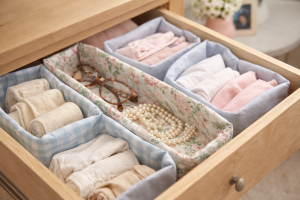
Creative homemakers quickly discovered that pillowcases could be folded, tucked, or sewn into customized organizers. By folding sections of the fabric inward, they created separate compartments within a drawer. Socks could be stored in one area, undergarments in another, and accessories in a third. This system prevented smaller items from becoming mixed together and made daily routines much more efficient.
Instead of rummaging through a crowded drawer searching for a matching pair of socks, people could immediately locate what they needed. The visual organization created by these compartments reduced frustration and helped maintain tidiness over time.
Some individuals took the concept even further.
Older pillowcases could be cut into smaller sections and transformed into custom storage sleeves. Simple stitches along the edges created pockets that could hold jewelry, office supplies, sewing materials, cosmetics, or kitchen utensils. A single worn pillowcase might become several useful organizers throughout the house.
This adaptability was one reason the method became so popular among resourceful homemakers.
Unlike modern storage products that come in fixed sizes and shapes, pillowcases could be customized to fit almost any space. A shallow drawer, a deep drawer, a small cabinet, or a cluttered shelf could all benefit from a solution tailored specifically to the available dimensions.
The approach reflected an important philosophy that guided many households for generations: use what you have before buying something new.
Today, consumers are often encouraged to solve organizational problems by purchasing additional products. Entire industries exist to sell bins, baskets, dividers, labels, and storage systems. While these products can certainly be useful, they are not always necessary.
The pillowcase method serves as a reminder that many effective solutions require little more than creativity and a willingness to see everyday objects differently.
Another benefit often overlooked is comfort.
Fabric-lined drawers feel softer and more inviting than bare wood or plastic surfaces. Folding clothing into a neatly lined drawer can create a sense of care and attention that transforms an ordinary storage space into something more pleasant. Even though the liner remains mostly hidden, many people enjoy knowing their belongings are stored in a clean and organized environment.
The fabric can also help absorb minor moisture fluctuations that sometimes occur in homes. While a pillowcase is not a substitute for proper humidity control, cotton naturally absorbs small amounts of moisture. In older houses where seasonal humidity changes were common, this added layer sometimes helped protect clothing and linens from musty odors.
Some homemakers even enhanced the effect by placing dried lavender, cedar chips, or scented sachets beneath the pillowcase liner. The fabric allowed subtle fragrances to circulate through the drawer while keeping the sachets hidden from view. Clothing emerged smelling fresh and clean, creating a pleasant experience every time a drawer was opened.
The psychological benefits of organization should not be underestimated either.
Many studies have suggested that clutter can contribute to feelings of stress and overwhelm. When belongings are disorganized, even simple tasks can become frustrating. Searching for misplaced items wastes time and creates unnecessary mental strain.
Clearly defined spaces help reduce that burden.
When socks have a designated section, when accessories are grouped together, and when clothing remains neatly arranged, daily routines become smoother. Small moments of order can create a greater sense of calm throughout the day.
The pillowcase trick supports this principle in a remarkably accessible way.
There is no need to purchase expensive systems or completely reorganize an entire room. A single pillowcase can improve the functionality of one drawer in a matter of minutes. The simplicity of the solution is part of its enduring appeal.
Beyond practicality, however, the pillowcase method carries something less tangible but equally meaningful: nostalgia.
For many people, it evokes memories of parents and grandparents who approached household management differently. Earlier generations often viewed homemaking as a skill built upon ingenuity, patience, and resourcefulness. Household knowledge was passed down through observation and experience rather than online tutorials or product advertisements.
Children learned by watching adults mend clothing, reuse containers, save scraps of fabric, and find creative purposes for worn items. Nothing was discarded casually if it could still serve a useful purpose.
A faded pillowcase might become a drawer liner.
An old shirt might become cleaning rags.
A glass jar might become storage for buttons or nails.
These practices reflected both economic necessity and a deeper appreciation for the value of everyday objects.
Today, as concerns about waste and sustainability continue to grow, many people are rediscovering these traditional habits. Repurposing household items not only saves money but also reduces unnecessary consumption. Every item reused is one less item entering a landfill and one less new product that must be manufactured.
The pillowcase organizer is a perfect example of sustainable living in action.
Rather than discarding a textile that still has functional value, it receives a second life. This simple act extends the usefulness of the material while reducing waste. Though small, such choices can add up over time.
Many modern homeowners are surprised by how effective these traditional methods remain.
After trying the technique, they often discover that expensive organizing systems are not always superior. The soft flexibility of fabric adapts naturally to changing storage needs. Drawers remain tidy, clothing stays protected, and the overall appearance becomes more organized with minimal effort.
Perhaps the greatest lesson hidden within this old-fashioned trick is not about drawer organization at all.
It is about perspective.
The pillowcase method reminds us that solutions do not always need to be purchased. Sometimes the answer is already sitting in a linen closet, waiting to be seen differently. In a culture that frequently encourages constant consumption, there is something refreshing about solving a problem through creativity rather than spending.
A worn pillowcase may seem insignificant.
It may appear destined for the trash or donation pile.
Yet with a little imagination, it can become a drawer liner, an organizer, a storage sleeve, or a practical household tool that continues serving a purpose for years.
That simple transformation reflects a timeless principle embraced by generations before us: value what you have, use resources wisely, and recognize that ordinary objects often possess far more potential than they first appear.
In a world filled with complicated products, endless advertising, and constant pressure to buy more, the humble pillowcase organizer offers a refreshing alternative. It is inexpensive, sustainable, effective, and easy to implement. More importantly, it reconnects us with a tradition of resourcefulness that many people find both comforting and inspiring.
Sometimes the best household solutions are not the newest inventions. Sometimes they are the forgotten ideas quietly passed down through generations—simple tricks that continue to prove their worth long after they have been overshadowed by modern conveniences. The pillowcase drawer organizer is one of those ideas, and its enduring appeal serves as a reminder that a cleaner, calmer, and more organized home does not always require spending money. Sometimes it only requires looking at familiar things with fresh eyes.