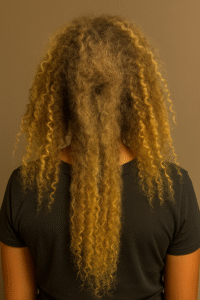
Many users claim transformative results, but what really happens when you leave apple cider vinegar on your hair overnight? For years, people have sworn by this humble kitchen staple for everything from digestion to skin clarity. In recent times, its rise in the beauty world has been nothing short of astonishing. Scroll through social media or hair care forums, and you’ll find countless testimonials about how a simple rinse of ACV restored shine, tamed frizz, or cleared dandruff better than any expensive salon product. Yet beneath all that praise, one question stands out—can its effects really intensify if left on the hair overnight?
This investigation started not with curiosity alone but with observation. So many natural remedies show promise in theory yet fail under practical, real-world conditions. The goal wasn’t to prove ACV magical, nor to discredit it. It was to understand—slowly, scientifically, and experientially—what this natural acid truly does when given time to work undisturbed through the night.
Apple cider vinegar’s secret lies in its composition. It contains acetic acid, a compound formed during fermentation that gives vinegar its sharp tang and powerful cleansing ability. It’s mildly acidic—strong enough to dissolve residue, gentle enough to be used with caution. When applied to the scalp, acetic acid helps rebalance the pH disrupted by modern shampoos, conditioners, and styling products. Many commercial hair products, though effective in short-term styling, tend to be alkaline, leaving the scalp slightly off-balance. Over time, this imbalance can lead to dullness, itchiness, and buildup.
ACV also contains trace vitamins B and C, antioxidants, and enzymes that, together, nurture scalp health. Its antimicrobial properties make it particularly effective against fungi and bacteria that contribute to dandruff and unpleasant odor. The question wasn’t whether ACV could help—it was how far those benefits could extend when left overnight, essentially allowing the scalp to reset itself naturally.
Preparation began with precision. Raw, unfiltered ACV was chosen because it contains “the mother”—the cobweb-like strand visible at the bottom of authentic bottles. This structure, made of proteins, enzymes, and friendly bacteria, is believed to enhance ACV’s potency. Still, even natural ingredients have limits, and acetic acid, if used undiluted, can be harsh. To minimize risk, the vinegar was diluted in a 1:1 ratio with water.
Before any full application, a patch test was essential. A small amount of the solution was applied to the skin near the ear, left for 15 minutes, then rinsed. No redness, no itching, no burning—signs that the formula was gentle enough to proceed.
The next step was application. The diluted mixture was poured into a clean spray bottle, ensuring even distribution. Hair was divided into sections to avoid missing spots. Starting from the scalp, the mist was sprayed carefully, just enough to dampen but not soak. Gentle circular motions followed—fingertips massaging the scalp slowly, stimulating blood flow, and helping the solution reach the roots. There was an instant cooling sensation, a subtle tingle that felt cleansing but not uncomfortable.
To prevent the ACV from dripping or drying out too quickly, a shower cap was placed over the hair, followed by a towel around the head to trap warmth and protect the pillow. The smell—sharp and vinegary—was noticeable but tolerable. Many online users had suggested that after a few minutes, the scent becomes faint enough to ignore. They were right.
As the night stretched on, the process became strangely meditative. The faint scent of vinegar seemed to fade into the background. It was easy to imagine the acetic acid quietly dissolving residue, restoring balance, neutralizing bacteria. The scalp felt clean, almost breathing again.
Morning came quietly, and the first surprise was tactile. The hair wasn’t stiff or sticky. It felt dry to the touch but clean, lighter somehow, as though the buildup had lifted away. The shower cap came off easily, revealing strands that didn’t cling or tangle.
In the shower, warm water rinsed the vinegar away, followed by a gentle sulfate-free shampoo. A faint aroma of apple lingered beneath the sharper vinegar scent, and as the water flowed clear, it felt as though a layer of dullness had been stripped off. A light conditioner followed—something nourishing but minimal. The towel-drying process revealed the first visible difference: the hair gleamed.
By the time it fully dried, the transformation was undeniable. The strands felt softer, smoother, and somehow cleaner—not just on the surface but at the roots. The scalp felt calm, not tight, not oily. Even frizz, that stubborn hallmark of humidity and product fatigue, seemed subdued. The natural pattern of the hair looked more defined, shinier without grease.
Beyond the aesthetics, the sensation was deeper. The scalp felt balanced, as if breathing freely after years of suffocation under layers of residue. It wasn’t magic—it was chemistry. The mildly acidic environment created by ACV helps flatten the cuticle layer of each strand, allowing it to reflect more light and appear glossier. That same acidity neutralizes the alkaline buildup from shampoos, restoring the scalp’s natural state.
But the story wasn’t finished with one night. Over the following days, attention turned to how long the effects lasted. Surprisingly, the hair stayed light and fresh for nearly a week, resisting the usual cycle of oiliness. Brushing was easier; the static and tangles that usually appeared midweek were minimal. The scalp remained itch-free, confirming ACV’s antibacterial and pH-balancing roles.
Yet as promising as these results were, caution remained necessary. The experiment had gone smoothly because the mixture was diluted and used sparingly. Undiluted vinegar could easily irritate, especially if left on too long or applied to sensitive skin. Reports from other users online painted a mixed picture—some praised the silky results, while others described dryness, flakiness, or even mild burns from improper use. The lesson was clear: nature’s power still demands respect.
To test durability, the process was repeated two weeks later with the same ratio. This time, a few drops of coconut oil were added before application to buffer the acidity further. The results were nearly identical—clean, balanced scalp, softer hair—but with an extra layer of moisture. It became clear that pairing ACV with gentle oils could enhance comfort without compromising cleansing.
By the third trial, something else emerged: less hair fall. Normally, brushing revealed a few stray strands left behind in the comb. After consistent ACV use, that number seemed smaller. While it’s difficult to prove direct causation, the improved scalp environment likely played a role. A clean scalp encourages healthier follicles, reducing the inflammation that sometimes contributes to shedding.
This led to a larger realization. ACV, while simple, works because it restores what commercial products often disrupt—balance. It doesn’t add artificial shine; it removes the dulling barriers that hide your hair’s natural gloss. It doesn’t stimulate new growth directly; it simply clears the space for growth to happen. It doesn’t perfume the hair with synthetic fragrance; it lets natural scent breathe.
But as with any treatment, overuse dulls the reward. Applying vinegar too frequently can over-strip oils, leaving hair dry or brittle. The scalp, though cleaner, can grow sensitive if the acid barrier is continually disrupted. The key is rhythm: once every week or two, followed by nourishing oils or conditioners, allows the benefits to build without causing imbalance.
Beyond function, the experience itself carried something meaningful. Sleeping with ACV in your hair requires patience, awareness, and intention—a willingness to let natural processes work quietly while you rest. It’s a gentle rebellion against the hurried routines of modern beauty care. In a world of instant masks and ten-minute fixes, there’s something humbling about surrendering a full night to restoration.
Curiosity led to broader research. Dermatologists confirm that ACV’s acidic pH—around 2.5 to 3—can help smooth the hair cuticle, especially when diluted to safe levels. The cuticle’s flatness determines reflectivity; a flatter cuticle means shinier, smoother hair. Additionally, acetic acid’s mild antimicrobial action suppresses Malassezia, the yeast associated with dandruff, explaining the reduction in flakes and itching.
Yet they also warn against trends that skip safety. Leaving ACV overnight, though tolerable for many, can cause irritation if the scalp barrier is already compromised. Scratches, eczema, or recent chemical treatments make the skin more permeable, allowing acid to penetrate deeper and cause discomfort. The golden rule: start slow, dilute generously, and listen to your skin.
From a cost perspective, ACV stands out. A bottle of raw, unfiltered apple cider vinegar costs a fraction of any premium scalp treatment. Yet its effects rival those of high-end clarifying products. That affordability democratizes care—it gives people an accessible way to reclaim hair health without chasing expensive formulas filled with chemicals.
In comparison tests with other natural remedies, ACV showed distinct strengths. Unlike oil masks, which focus on moisture, vinegar works on detoxification—removing buildup and resetting the pH. Unlike baking soda scrubs, which can be too alkaline and damaging over time, ACV gently cleanses without disrupting the acid mantle. Its simplicity is its advantage.
Weeks later, after several careful uses, patterns emerged: the scalp stayed calmer, dandruff remained minimal, and the hair’s shine persisted. Friends began asking if a new product was behind the change. The answer, of course, was a single kitchen ingredient handled with respect.
Still, honesty demanded acknowledgment of its limits. ACV cannot reverse structural damage caused by heat styling or chemical dyes. It won’t repair split ends or replace protein lost from bleaching. Its strength lies in the foundation—scalp health, cleanliness, and environmental balance. Think of it as the gardener of hair care: it prepares the soil but doesn’t replace the seeds.
Overnight application amplified its effects simply because of time. Eight hours allows acetic acid to dissolve residue thoroughly, and the enclosed warmth from the shower cap enhances penetration. But this same factor increases risk. Those with sensitive skin should consider shorter exposures—one hour, two hours—before building tolerance.
As the experiment concluded, a deeper appreciation formed for the discipline behind natural care. It’s easy to underestimate something so ordinary. Vinegar, after all, sits on kitchen shelves unnoticed. Yet when approached thoughtfully, it becomes a bridge between science and simplicity—a reminder that effective beauty doesn’t require complexity.
Months after the initial trial, the routine evolved. Once every two weeks, an overnight ACV rinse, always diluted, always followed by moisture replenishment. Results remained consistent: stronger roots, calmer scalp, glossier strands. Each session reaffirmed the principle that good results rarely come from excess, but from balance.
And there was a quiet satisfaction in the ritual itself—the measuring, mixing, spraying, wrapping. It felt restorative beyond the physical transformation. It was self-care stripped of extravagance, an act of respect toward one’s body.
When asked later if leaving ACV overnight was worth it, the answer came easily. Yes—but only if done with patience and caution. The transformation isn’t instant glamour; it’s subtle renewal. It doesn’t replace conditioners, oils, or masks—it complements them. It doesn’t demand faith—it rewards consistency.
For some, the vinegar’s scent might remain a hurdle. For others, its simplicity will feel liberating. But beneath the sensory quirks lies real, measurable change: a balanced scalp, smoother texture, revived shine. In an industry full of promises, few ingredients deliver so much with so little.
Ultimately, the overnight ACV experiment became more than a test of hair treatment. It became a lesson in balance—the same balance ACV restores on the scalp, it teaches in life. Moderation matters. Nature doesn’t rush. Healing doesn’t shout.
And when dawn comes, and the vinegar rinses away leaving strands lighter and cleaner than before, you realize something quietly profound: sometimes, the most transformative results are the ones that happen while you sleep.